Discover the best time of year, based on historical climate, temperature, and precipitation.
The best weather in Taipei is from March, April, November, but considering flight prices and crowds, the best months to visit are January, March, April. — variable climate
🌧Rainy
Contains affiliate links.
| Score | 72 | 72 | 74 | 74 | 50 | 18 | 13 | 13 | 39 | 65 | 75 | 69 |
|---|---|---|---|---|---|---|---|---|---|---|---|---|
| Climate | Mild | Mild | Humid | Humid | Rainy | Hot & rainy | Hot & rainy | Hot & rainy | Hot & rainy | Rainy | Pleasant | Mild |
| Temperature | 14–19°C | 14–20°C | 15–22°C | 18–25°C | 22–28°C | 24–31°C | 26–33°C | 25–32°C | 24–30°C | 22–27°C | 19–24°C | 15–20°C |
| Feels like | 13–18°C | 13–20°C | 15–23°C | 20–28°C | 25–33°C | 29–37°C | 31–39°C | 31–38°C | 28–35°C | 24–29°C | 20–26°C | 15–20°C |
| Precipitation | 68mm 14 days | 72mm 12 days | 110mm 14 days | 130mm 16 days | 220mm 20 days | 251mm 22 days | 163mm 19 days | 216mm 21 days | 240mm 16 days | 182mm 16 days | 74mm 15 days | 76mm 15 days |
| Sunshine | 3.9h ☀︎ 36% | 4.2h ☀︎ 37% | 6.2h ☀︎ 51% | 7.2h ☀︎ 56% | 6.8h ☀︎ 51% | 6.7h ☀︎ 49% | 10.3h ☀︎ 76% | 9.8h ☀︎ 75% | 9.3h ☀︎ 76% | 6.5h ☀︎ 56% | 5.0h ☀︎ 45% | 3.1h ☀︎ 29% |
| Wind | NE · 17 km/h | NE · 16 km/h | NE · 16 km/h | NE · 15 km/h | NE · 14 km/h | W · 14 km/h | NE · 15 km/h | NE · 15 km/h | NE · 16 km/h | E · 20 km/h | E · 18 km/h | NE · 17 km/h |
| Humidity (%) | 79% | 80% | 80% | 81% | 83% | 82% | 79% | 81% | 81% | 81% | 81% | 80% |
| Perfect days | 21% | 31% | 38% | 33% | 18% | 2% | 0% | 0% | 11% | 36% | 41% | 23% |
| Dry streak | 7d | 7d | 6d | 5d | 4d | 3d | 5d | 4d | 6d | 7d | 6d | 6d |
| Sunny streak | 5d | 6d | 8d | 8d | 11d | 14d | 22d | 19d | 15d | 11d | 7d | 5d |
| Extreme heat | — | — | — | — | 1% | 0% | 5% | 3% | 1% | 0% | — | — |
| Temperature | +1.4° | +1.4° | +2.5° | +1.4° | +1.4° | +2.1° | +2.5° | +2.2° | +2.0° | +1.2° | +1.9° | +0.4° |
| Rainfall | Getting drier | Stable | Getting drier | Getting drier | Getting wetter | Getting drier | Getting drier | Getting drier | Getting drier | Getting drier | Getting drier | Stable |
| Ideal warm days | 0% | 3% | 8% | 18% | 22% | 15% | 14% | 16% | 35% | 19% | 14% | 3% |
| Outdoor comfort | 24% | 32% | 29% | 23% | 8% | 0% | 0% | 0% | 2% | 26% | 33% | 27% |
| Dry week odds | 7% | 8% | 4% | 2% | 1% | 0% | 1% | 0% | 4% | 8% | 4% | 4% |
| Heavy rain | 2% | 3% | 4% | 4% | 10% | 12% | 7% | 9% | 10% | 9% | 4% | 2% |
| Muggy days | — | 1% | 6% | 34% | 77% | 98% | 100% | 100% | 93% | 55% | 26% | 1% |
| Oppressive days | — | — | — | — | 11% | 62% | 87% | 84% | 40% | 7% | — | — |
| Day length | 10.8h | 11.3h | 12.0h | 12.7h | 13.4h | 13.7h | 13.5h | 13.0h | 12.3h | 11.6h | 10.9h | 10.6h |
| Tourist Crowds | Low season | Shoulder season | Shoulder season | Low season | Low season | Low season | Low season | Low season | Low season | Shoulder season | High season | High season |
Chinese New Year is the most important traditional holiday, celebrated with family gatherings, special foods, and temple…
Held shortly after Chinese New Year, the Lantern Festival culminates in the breathtaking release of sky lanterns in Ping…
This traditional festival features exciting dragon boat races on the Tamsui River, along with eating zongzi (sticky rice…
The Mid-Autumn Festival is a time for family reunions, moon gazing, and eating mooncakes and pomelos. Many locals also e…
Taipei hosts one of the world's most spectacular New Year's Eve celebrations, centered around the iconic Taipei 101 fire…
The Taipei Summer Travel Fair is a significant event for both locals planning vacations and international visitors seeki…
Taipei and its surrounding areas, like Yangmingshan National Park, come alive with beautiful cherry blossoms. The weathe…
During the Ghost Festival, Taoist and Buddhist families make offerings to appease wandering spirits. While not a tourist…
This major international bicycle trade show attracts industry professionals and enthusiasts from around the globe. While…
The Taipei Marathon attracts thousands of runners from Taiwan and abroad, winding through the city's iconic landmarks. H…
Every guidebook tells you to visit Taipei in November for dry air, but April is the real masterstroke: you trade a wisp of humidity for empty sidewalks, open night markets, and a city that has not yet retreated indoors.
Taipei sits in an ancient lakebed, a flat bowl trapped between steep subtropical ridges where the Keelung River and Xindian River collide to form the Tamsui River. Because it is cupped by mountains, the city hoards its weather. When it is damp, the mist clings to the jungle peaks for weeks; when summer hits, the basin converts into an inescapable steam bath. Most travelers look at the meteorological charts, see the modest autumn rainfall, and book November. They get pleasant weather, but they also get the crowds that come with everyone else following the exact same advice. If you want the city at its most generous and unhurried, you ignore the conventional consensus and go in spring.
Early spring begins with the lingering chill of winter breaking over the hills. In March, the slopes of Yangmingshan National Park flush pink with cherry blossoms, and the city hums with international visitors arriving for the Taipei International Cycle Show. It is brisk and lively, but April is where the alchemy truly shifts.
April is technically classified as the low season, which is baffling until you realize how many people are terrified of a brief shower. The temperature settles into an effortless, short-sleeve warmth that feels clean rather than heavy. You will catch rain, but it tends to fall in short afternoon bursts rather than days-long drizzles, leaving the tarmac clean and the air smelling of wet asphalt and mountain moss. More importantly, foot traffic plummets. You can wander through alleyways, secure a stool at an outdoor stall without waiting behind a tour group, and hike the ridge trails without stepping on heels. November may hold the statistical crown for dry skies, but April delivers the city with breathing room.
By May, the basin begins to simmer. The humidity climbs relentlessly, and the afternoon downpours arrive with torrential force, sweeping off the mountains and flooding street gutters in minutes. In June, the heat solidifies into a physical weight. The Dragon Boat Festival brings throngs to the banks of the Tamsui River to cheer paddlers and eat sticky rice dumplings, but midday exploration turns punishing.
Then comes July, bringing a contradiction that every traveler should heed: it is the single most crowded month on the calendar despite having the most punishing conditions of the entire year. Domestic family travelers and regional tourists pack the air-conditioned halls for events like the Taipei Summer Travel Fair, yet stepping onto the pavement at midday feels like opening an oven door. August brings little relief, though the evening ceremonies of the Ghost Festival cast a moody, atmospheric spell as paper offerings burn at curb edges across older neighborhoods. Unless your trip revolves strictly around air-conditioned malls and night markets after dark, avoid midsummer entirely.
September is an unpredictable hinge month. The summer heat begins to crack, but it remains intensely warm, and the basin remains vulnerable to passing typhoons that can scrub the city clean or lock you indoors under sheeting rain. Yet when the skies clear, the quality of light changes, casting long, sharp shadows across the concrete sprawl.
October is when the outdoor life returns in full force. The Mid-Autumn Festival transforms the riverfront into an unbroken string of family gatherings, with sweet barbecue smoke drifting through the night air and boxes of pomelos shared on park benches. The air cools down enough for long walks along the riverbanks, and the humidity softens into something manageable. It is an easy, social time to be in town, though visitor numbers begin climbing back toward their winter peak.
November is the darling of the weather station: cool, breezy, and reliably dry. But that perfection comes at the price of full flights, booked-out boutique stays, and packed transit. In December, the temperature drops further into a cool, gray rhythm. Runners take over the boulevards for the Taipei Marathon, and the month ends in a spectacular crush of people packing the streets of Xinyi to watch explosions of light erupt from Taipei 101 for the New Year countdown.
January and February bring the genuine damp chill of northern Taiwan’s winter. While it never freezes, the humidity works its way through wool and coats. Chinese New Year turns the capital into an eerie ghost town for a few days as residents scatter across the island, followed shortly by the spectacle of the Lantern Festival, when crowds journey out to Pingxi to watch thousands of glowing paper lanterns lift into the cold mountain night. It is atmospheric and deeply cultural, but you will share every square inch of it.
Top sights and attractions to build your days around once you know when to go.
The National Palace Museum, also known as Taipei Palace Museum, is a national museum headquartered in Taipei, Taiwan. Founded in Beijing in 1925, the museum was re-established in Shilin, Taipei, in 1965, later expanded with a southern branch in Taibao, Chiayi, in 2015.
The Chiang Kai-shek Memorial Hall is a national monument and tourist attraction erected during Taiwan’s martial law period in memory of Chiang Kai-shek, former President of the Republic of China. In recent years, the site has also incorporated remembrance of Taiwan’s martial law period (1949–1987).
The Taipei Grand Mosque, abbreviated as TGM, and also known as the Taipei Zheng He Mosque is a mosque located in the Da'an District of Taipei City, in Taiwan. It is the largest and oldest mosque in Taiwan and its most important Islamic structure.
The Taipei Zoo, sometimes referred to as the Muzha Zoo, is a public zoological garden in Wenshan District, Taipei, Taiwan. It is the most famous zoological garden in Taiwan and a leader in conservation, research and education, and recreation. It is one of the largest zoos in Asia, with a total area of 165 hectares, of which more than 90 ha are developed.
Bangka Lungshan Temple is a Taiwanese folk temple in Wanhua District, Taipei, Taiwan. The temple was built in Taipei in 1738 by settlers from Fujian during Qing rule in honor of Guanyin. It served as a place of worship and a gathering place for the Chinese settlers. In addition to its Chinese Buddhist elements, it includes halls and altars to Chinese folk deities such as Mazu and Guan Yu.
The National Taiwan Museum, established in 1908, is the oldest museum in Taiwan. It was founded by the colonial government during Taiwan's period of Japanese rule. The museum is located in Zhongzheng District, Taipei.
Hsing-tian Temple is a popular temple in Zhongshan District, Taipei, Taiwan. This temple is devoted to Lord Guan, the Patron Deity of businessmen, military personnel and policeman. This temple is situated on a street corner near the center of the city. Sculptures of dragons feature prominently in this temple's design. It covers over 7,000 square meters.
The Taipei Cultural Mosque is a mosque in Zhongzheng District, in the city of Taipei, Taiwan. It is the third mosque built in Taiwan and it is owned by the Chinese Muslim Youth League. The building also houses the Taiwan Halal Integrity Development Association.
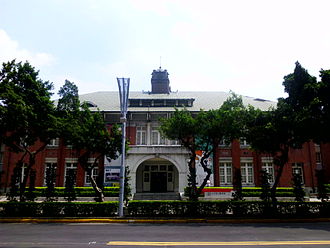
The Museum of Contemporary Art Taipei is a museum of contemporary art, located in Datong District, Taipei, Taiwan.
The Taipei Confucius Temple is a Confucian temple in Datong District, Taipei, Taiwan.
The 228 Peace Memorial Park is a historic site and municipal park located at 3 Ketagalan Boulevard, Zhongzheng District, Taipei, Taiwan. The park contains memorials to victims of the February 28 Incident of 1947, including the 228 Memorial Monument that stands at the center of the park and the Taipei 228 Memorial Museum, housed at the site of a former radio station that operated under Japanese and Kuomintang rule. The National Taiwan Museum stands at the park's north entrance. The park also has a bandshell and exercise areas.
The Ama Museum is a museum dedicated to comfort women in Taiwan. It opened in 2016, in Datong District, Taipei. The original location closed in November 2020, and the museum was relocated and reopened in April 2021 at 5F., No. 32, Sec. 3, Chengde Rd., Datong Dist., Taipei City, Taiwan (R.O.C.)
Places from Wikidata and Wikipedia.
Contains affiliate links.