Things to do in New Taipei City
Top sights and attractions to build your days around once you know when to go.

National Palace Museum
The National Palace Museum, also known as Taipei Palace Museum, is a national museum headquartered in Taipei, Taiwan. Founded in Beijing in 1925, the museum was re-established in Shilin, Taipei, in 1965, later expanded with a southern branch in Taibao, Chiayi, in 2015.

Chiang Kai-shek Memorial Hall
The Chiang Kai-shek Memorial Hall is a national monument and tourist attraction erected during Taiwan’s martial law period in memory of Chiang Kai-shek, former President of the Republic of China. In recent years, the site has also incorporated remembrance of Taiwan’s martial law period (1949–1987).

Taipei Grand Mosque
The Taipei Grand Mosque, abbreviated as TGM, and also known as the Taipei Zheng He Mosque is a mosque located in the Da'an District of Taipei City, in Taiwan. It is the largest and oldest mosque in Taiwan and its most important Islamic structure.

Bangka Lungshan Temple
Bangka Lungshan Temple is a Taiwanese folk temple in Wanhua District, Taipei, Taiwan. The temple was built in Taipei in 1738 by settlers from Fujian during Qing rule in honor of Guanyin. It served as a place of worship and a gathering place for the Chinese settlers. In addition to its Chinese Buddhist elements, it includes halls and altars to Chinese folk deities such as Mazu and Guan Yu.

National Taiwan Museum
The National Taiwan Museum, established in 1908, is the oldest museum in Taiwan. It was founded by the colonial government during Taiwan's period of Japanese rule. The museum is located in Zhongzheng District, Taipei.

Hsing Tian Kong
Hsing-tian Temple is a popular temple in Zhongshan District, Taipei, Taiwan. This temple is devoted to Lord Guan, the Patron Deity of businessmen, military personnel and policeman. This temple is situated on a street corner near the center of the city. Sculptures of dragons feature prominently in this temple's design. It covers over 7,000 square meters.

Taipei Confucian Temple
The Taipei Confucius Temple is a Confucian temple in Datong District, Taipei, Taiwan.

Taipei Cultural Mosque
The Taipei Cultural Mosque is a mosque in Zhongzheng District, in the city of Taipei, Taiwan. It is the third mosque built in Taiwan and it is owned by the Chinese Muslim Youth League. The building also houses the Taiwan Halal Integrity Development Association.
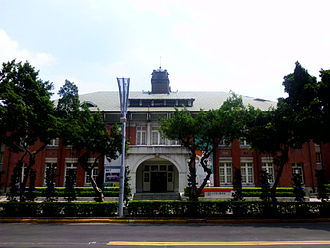
MoCA Taipei
The Museum of Contemporary Art Taipei is a museum of contemporary art, located in Datong District, Taipei, Taiwan.

228 Peace Memorial Park
The 228 Peace Memorial Park is a historic site and municipal park located at 3 Ketagalan Boulevard, Zhongzheng District, Taipei, Taiwan. The park contains memorials to victims of the February 28 Incident of 1947, including the 228 Memorial Monument that stands at the center of the park and the Taipei 228 Memorial Museum, housed at the site of a former radio station that operated under Japanese and Kuomintang rule. The National Taiwan Museum stands at the park's north entrance. The park also has a bandshell and exercise areas.

Ama Museum
The Ama Museum is a museum dedicated to comfort women in Taiwan. It opened in 2016, in Datong District, Taipei. The original location closed in November 2020, and the museum was relocated and reopened in April 2021 at 5F., No. 32, Sec. 3, Chengde Rd., Datong Dist., Taipei City, Taiwan (R.O.C.)

Daan Forest Park
Daan Forest Park is a public park near the centre of the Da'an District of Taipei, Taiwan. The park occupies twenty-six hectares and is bordered on its north, south, east, and west by Xinyi Road (信義路), Heping E. Road (和平東路), Jianguo S. Road (建國南路), and Xinsheng S. Road (新生南路), respectively. The park is used by residents of Taipei as a green activity space and for various outdoor activities. The park was created in 1994 after the eviction of longtime squatters and the demolition of illegal buildings on municipal land.
Places from Wikidata and Wikipedia.
Contains affiliate links.