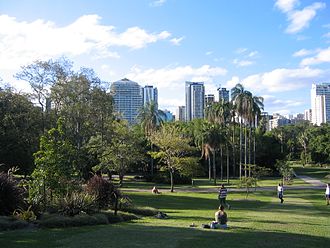
Most travelers assume Brisbane peaks in the sunny warmth of late winter or spring, but its purest sweet spot lands quietly in June, when the subtropical air turns crisp, the summer crowds are long gone, and the city riverfront belongs entirely to everyday life.
Brisbane is a subtropical capital built inside the deep loops of a tidal river, sprawling across a wide basin between inland mountain ranges and the salt shallows of Moreton Bay. For decades, outsiders dismissed it as an overgrown country town on the highway to coastal surf strips, but it functions today as Queensland's cultural heart—an intensely outdoor city defined by wooden verandas, shaded beer gardens, and ferry commutes. To understand Brisbane, however, you have to understand how dramatically its seasons invert northern expectations. The city does not wake up in summer; it endures summer behind closed blinds and under humming ceiling fans, coming alive only when the Southern Hemisphere tilts away from the sun.
June and July: The crisp, clear peak nobody sells you
A conventional weather chart will point you straight toward August, when daytime warmth ticks up a fraction and the skies are marginally drier. That advice misses the human reality of the city. June is Brisbane's true sweet spot, offering radiant cloudless days, sharp fresh mornings, and an easy calm before the late-winter show crowds arrive. You wake to air that feels cool enough for light wool, spend midday basking in mild sun, and wander without breaking a sweat.
In June, the city feels spacious. You can stroll through the morning river mist from Spring Hill down to the water, or spend hours drifting between the indie bookstores and open-sided cafes of West End without jostling for a patch of shade. The glare that bleaches the city for half the year vanishes, replaced by a crystalline golden light that washes over the timber Queenslanders in Red Hill and the boat moorings off Chelmer. July keeps this exact rhythm, shaving off another degree or two of overnight warmth and keeping the skies spotless.
August and September: The high-voltage carnival
August delivers technically flawless weather, but the atmosphere pivots from neighborhood intimacy to regional spectacle. The Royal Queensland Show—known locally as the Ekka—takes over the city calendar mid-month, drawing hundreds of thousands of people from country towns and suburbs alike. The days are pleasantly warm, hovering in the low twenties, but hotel rooms fill fast and the tranquil river walks acquire a hurried, bustling energy.
September carries that momentum directly into the Brisbane Festival, wrapping the city in three weeks of theater, public art, and outdoor revelry that culminates in the roaring pyrotechnics of Riverfire over the Brisbane River. The jacarandas begin their purple explosion across Woolloongabba and Hawthorne, and patio tables in Albion fill until late into the evening. It is an exhilarating, photogenic window to visit, though you trade away the unhurried solitude of early winter.
October and November: The pre-summer pressure cooker
By October, the winter dryness snaps. Thunderheads begin to stack up behind the ranges in the late afternoon, bringing sudden, violent downpours that crack the heat before the humidity rolls back in. The city is still manageable on foot, but the ease of midday exploration begins to decay as the midday heat pushes deeper into the high twenties.
November brings an astonishing surge of visitors, pushing the city to its annual peak in foot traffic even as the outdoor conditions start to fray. Conferences, early holiday bookings, and end-of-year gatherings pack the dining strips from Stones Corner to Norman Park. It is the month when the humidity settles like a heavy wet wool blanket over the river basin, yet the streets are busier than at any other point on the calendar—a classic clash between calendar convenience and seasonal reality.
December to February: The subtropical swamp
Summer in Brisbane is not beach weather; it is an indoor sport. Because the city sits on an inland river basin without direct ocean surf, the combination of sticky humidity, afternoon electrical storms, and apparent temperatures pushing well into the thirties makes extended urban walking genuinely exhausting between noon and dusk. February is the wettest and stickiest of all, dropping heavy tropical sheets of rain that turn afternoon itineraries upside down.
Yet people still arrive in droves. December swells around Christmas in Brisbane light displays and South Bank markets, peaking with massive family crowds gathering along the riverfront for the New Year's Eve Fireworks. In January, the Brisbane International tennis tournament brings world-class competition to hardcourts that bake under a relentless sun. If you must visit in midsummer, adopt the local rhythm: hibernate in air-conditioned art galleries through the heat of the day, retreat to air-cooled noodle halls in Sunnybank, and only venture back outside when twilight finally brings a salt breeze blowing off the bay.
March to May: The long exhale
March lingers as an unruly tail of summer, damp and hot, before April finally breaks the back of the humidity. When autumn arrives in South East Queensland, it does not arrive as falling leaves and grey mists, but as an enormous physical sigh of relief. The cloud cover recedes, rain drops sharply, and the sticky air clears out completely.
May is the gateway to winter perfection. The daytime heat recedes into crisp, comfortable sunshine that lets you walk the winding parklands of Kalinga or explore the leafy hilly ridges of Alderley in complete comfort. Along with June, May offers one of the most underappreciated windows of the year—empty footpaths, effortless dining without reservations, and weather that makes lingering outside feel like a deliberate luxury.