Discover the best time of year, based on historical climate, temperature, and precipitation.
The best weather in Volgograd is from June, August, September. — consistent weather climate
☀️Pleasant
| Score | 10 | 13 | 24 | 60 | 87 | 94 | 86 | 92 | 93 | 52 | 14 | 10 |
|---|---|---|---|---|---|---|---|---|---|---|---|---|
| Climate | Polar | Polar | Cold | Cold | Mild | Pleasant | Pleasant | Pleasant | Pleasant | Cold | Cold | Polar |
| Temperature | -8–-2°C | -6–0°C | -2–7°C | 6–16°C | 12–22°C | 18–29°C | 20–31°C | 19–31°C | 13–23°C | 6–14°C | 0–5°C | -5–0°C |
| Feels like | -13–-7°C | -11–-5°C | -7–2°C | 2–13°C | 9–20°C | 16–28°C | 19–30°C | 18–29°C | 10–20°C | 3–11°C | -4–1°C | -10–-5°C |
| Precipitation | 44mm 11 days | 30mm 9 days | 35mm 8 days | 34mm 6 days | 55mm 7 days | 27mm 3 days | 37mm 4 days | 10mm 1 days | 25mm 4 days | 35mm 6 days | 34mm 7 days | 39mm 10 days |
| Sunshine | 2.1h ☀︎ 23% | 3.7h ☀︎ 36% | 6.8h ☀︎ 57% | 10.0h ☀︎ 73% | 11.3h ☀︎ 74% | 13.6h ☀︎ 85% | 13.1h ☀︎ 83% | 12.6h ☀︎ 88% | 9.9h ☀︎ 79% | 7.0h ☀︎ 65% | 3.2h ☀︎ 35% | 1.6h ☀︎ 19% |
| Wind | S · 21 km/h | SW · 21 km/h | NE · 21 km/h | SW · 22 km/h | N · 20 km/h | N · 19 km/h | N · 19 km/h | NE · 20 km/h | NE · 20 km/h | SW · 20 km/h | S · 20 km/h | S · 20 km/h |
| Humidity (%) | 85% | 81% | 72% | 61% | 55% | 46% | 46% | 41% | 52% | 68% | 79% | 84% |
| Day length | 8.8h | 10.2h | 11.9h | 13.7h | 15.3h | 16.1h | 15.7h | 14.3h | 12.6h | 10.8h | 9.2h | 8.3h |
On February 2, Volgograd commemorates the end of the Battle of Stalingrad with ceremonies, military parades and wreath-l…
May 9 is celebrated across Russia, but Volgograd, as a Hero City of the Battle of Stalingrad, marks it with especially l…
Most travelers arrive in Volgograd drawn by the monumental weight of its wartime memory during national commemorations, but the city's finest hour belongs to the quiet, sun-drenched expanse of early summer and early autumn when the crowds depart and the Volga breeze turns benevolent.
Volgograd stretches like a thin ribbon along the western bank of the Volga, a city permanently defined by the colossal clash that took place here when it bore the name Stalingrad. Most visitors arrive out of duty or pilgrimage, packing the memorial grounds when state anniversaries fill the air with brass bands and wreath-laying ceremonies. Yet to experience this legendary river port at its most compelling, you have to look beyond the scripted pageantry. When the ceremonial crowds disperse, Volgograd settles into the expansive, unhurried rhythm of the southern Russian steppe, bathed in immense river light and wide skies.
Winter here is merciless. Biting winds sweep across the frozen expanse of the Volga and climb the barren slopes of Mamayev Kurgan, where temperatures regularly hover well below freezing and the biting chill makes ten minutes outdoors feel like an endurance test. The sky remains heavy and pale, offering barely a few hours of weak daylight.
Yet despite the biting cold, February sees a sharp influx of visitors. On February 2, the city marks the anniversary of the end of the Battle of Stalingrad. Crowds of pilgrims, military personnel, and families of veterans gather at Mamayev Kurgan under leaden skies, bearing carnations through the snow. It is an arresting, deeply solemn spectacle, but outside of those ceremonial hours, the city huddles indoors against the frost. Unless you are specifically drawn by this commemorative pilgrimage, winter is the hardest, bleakest time to visit.
March arrives with a sullen, slow thaw. Snow turns to slush along the riverbanks, the air remains raw, and the grey steppe landscape takes weeks to awaken. While the days begin to stretch and the sun cuts through the winter overcast, the wind off the river keeps a sharp edge well into the month.
By late April, the transformation gathers real momentum. Afternoon temperatures climb toward pleasant territory, cafe terraces begin to unfurl along the boulevards, and the dust of winter gets swept away. April offers an easy, low-key prelude to the season, though it still carries unpredictable swings between warm sunshine and lingering chills.
May is the emotional peak of the city's calendar. For Victory Day on May 9, Volgograd transforms into the symbolic heart of the nation. Thousands descend to pay homage at Mamayev Kurgan, military parades roll through the broad central streets, and fireworks reflect across the broad current of the Volga late into the evening.
The weather is genuinely lovely—warm, green, and vibrant—with comfortable afternoons that make strolling effortless. However, this is also the busiest, most congested month of the entire year. Accommodations fill up months in advance, memorials are packed shoulder to shoulder, and the city operates under an intense patriotic spotlight. If you want communal emotion and stirring historical theater, May delivers it in spades; if you want contemplative exploration, it will overwhelm you.
June is the undisputed highlight of the year. Once the May festivities conclude, visitor numbers drop sharply, leaving wide, tree-shaded avenues and open riverbanks to the locals. Daylight stretches past thirteen hours a day, the sun shines almost without interruption, and the temperature settles into an ideal, dry warmth that rarely feels oppressive.
July and August dial up the heat, turning the surrounding steppe golden and parched. Midday can push past 30 degrees, encouraging a slower pace where sightseeing is best done in the early morning before retreating to the riverfront in the evening. August in particular is exceptionally dry, with crisp, starry steppe nights that cool down reliably once the sun dips behind the western hills.
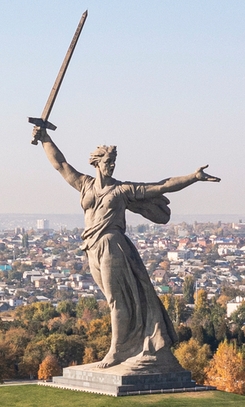
September rivals June for sheer comfort. The intense heat breaks into mellow, golden-warm afternoons, rain remains rare, and the crowds stay low. Walking the vast terraced ascent of Mamayev Kurgan in the amber September light, with the wide blue swath of the Volga below, offers the most atmospheric and reflective encounter with the city's monumental scale.
October cools down quickly, stripping the trees along the embankment bare and bringing crisp, autumnal air that requires a sturdy coat by month's end. By November, the steppe winds return in force, daytime temperatures plunge toward freezing, and the long, silent winter closes in once again.